More Women on the Bench, More Access to Justice
CSW70 Side Event Examines How Gender Parity in the Judiciary Strengthens Justice Systems Worldwide
On March 10, diplomats, judges, lawyers, and civil society leaders gathered in New York for a timely discussion about who interprets the law—and why it matters. Held at Simpson Thacher & Bartlett LLP as a side event during the Commission on the Status of Women 70 (CSW70), the event explored the relationship between gender parity in the judiciary and women’s access to justice.
The discussion, titled “Women’s Equal Right to Participate in the Judiciary and Women’s Access to Justice: More Women, More Access,” brought together diplomats, legal experts, and advocates to examine the structural barriers women face in justice systems—and the role that greater representation on the bench can play in dismantling those barriers.
The event was organized by the Working Group on Gender Parity for the International Court of Justice and the American Branch of the International Law Association (ABILA) Committee on Gender Justice in International Law, with support from the Permanent Missions to the United Nations (UN) of Canada, Columbia, Kenya, Mexico, and Singapore, the International Association of Women Judges (IAWJ), and UN Women UK.
Across eight speakers, the discussion repeatedly returned to a core message: access to justice is a fundamental human right—but without equal representation in the institutions that deliver justice, that right cannot be fully realized.
Opening Remarks: Representation and the Legitimacy of Courts

The conversation began with Ambassador Jennifer Feller, Director General for Human Rights and Democracy for Mexico’s Ministry of Foreign Affairs, who emphasized that representation in the judiciary is not merely symbolic. Judicial decisions, she explained, are never produced in a vacuum.
“Law is interpreted by human beings,” she said. “Courts shape how societies understand justice itself.”
Because judges bring their perspectives and experiences to legal interpretation, the composition of courts directly affects the credibility of the justice system. When women are absent or underrepresented, she argued, courts risk failing to reflect the lived realities of half the population. Ambassador Feller pointed to Mexico’s 2019 constitutional reforms establishing gender parity across branches of government as an example of how states can institutionalize equality. The reforms were rooted in the belief that institutions function more effectively and more democratically when they reflect the societies they serve. She also noted that experience from other areas of governance shows that women’s participation can reshape policy priorities. In many countries, increased representation of women in legislative spaces has led to greater investment in education, social protection, and family welfare policies. In the judiciary, Ambassador Feller concluded, greater gender balance strengthens not only fairness but also institutional legitimacy.
Structural Barriers and the Emerging Challenge of AI

The second speaker, Catherine Amirfar, Partner and Co-Chair of the International Dispute Resolution and Public International Law Groups, Debevoise and Plimpton LLP, highlighted the persistent gender gap in judicial leadership. Globally, women represent approximately 43 percent of judges, she noted. Yet they hold only about 26 percent of senior judicial positions, a pattern that becomes more evident the higher one moves in the judicial hierarchy.
“The higher the stakes,” Amirfar said, “the fewer the women.”
She also introduced an emerging dimension of the conversation: artificial intelligence (AI). Courts and legal systems are increasingly adopting AI tools for legal research, case management, and decision-support processes. But these systems are often developed by teams that remain overwhelmingly male. According to a study by UNESCO, 44 percent of AI systems analyzed across industries showed evidence of gender bias. Meanwhile, the World Economic Forum has reported that women make up only about 30 percent of the global AI workforce. This imbalance matters because algorithms can replicate and amplify existing inequalities. If judicial technologies are built without diverse perspectives, they may unintentionally reinforce harmful biases, for example, by discounting women’s testimony or overlooking gendered patterns of harm.
Amirfar also pointed to new international frameworks addressing these risks, including guidelines developed by UNESCO and the Council of Europe’s emerging legal instruments on AI and human rights. However, she stressed that technology governance must move quickly to keep pace with the rapid adoption of AI tools in justice systems.
Gender Perspectives in International Law

The third speaker, Akila Radhakrishnan, Legal Advisor for the End Gender Apartheid Campaign, explored how representation within international courts shapes the development of legal doctrine—focusing particularly on the International Court of Justice (ICJ). Radhakrishnan began by noting that international courts have historically not been seen as venues for gender justice. Yet, she argued, this perception is closely tied to the absence of women in these institutions for much of their history. The ICJ appointed its first female judge only in 1995, and in the court’s entire history, only seven of its 107 judges have been women.
“That reality forces us to ask an important question,” she said. “Is it that gender issues were never brought before the court, or is it that the people sitting on the bench were not hearing them?”
Radhakrishnan pointed to examples across international tribunals where the presence of women judges has directly shaped legal outcomes. One moment occurred at the International Criminal Tribunal for Rwanda, where a woman judge questioned why indictments lacked charges of sexual violence—prompting prosecutors to amend the charges and recognize rape as a central component of the genocide.
“That intervention fundamentally changed the course of the case,” Radhakrishnan noted. “It showed very clearly that who sits on the bench matters.”
At the ICJ, she said, the increasing, though still limited, presence of women judges is beginning to influence legal reasoning. In advisory opinions related to the Occupied Palestinian Territories, for example, judicial opinions have begun to examine gendered dimensions of occupation. Separate opinions by judges with feminist legal backgrounds have analyzed issues such as how restrictions on movement and identity documentation affect women’s ability to access water, healthcare, and other essential services. More recently, she said, some of these gendered considerations have begun appearing in majority decisions. In cases involving humanitarian assistance, the court has acknowledged the specific impacts of food shortages and aid restrictions on pregnant and breastfeeding women.
“These are small steps,” she said, “but they signal a growing willingness to recognize that conflict and occupation have gendered impacts.”
Looking ahead, Radhakrishnan suggested that several cases currently before the court could further expand gender jurisprudence in international law. Ongoing proceedings addressing alleged genocide against the Rohingya, for example, have already included arguments highlighting gender-specific harms such as reproductive violence. She also pointed to a potential future case concerning Afghanistan that could become the first case brought to the ICJ under the Convention on the Elimination of All Forms of Discrimination against Women.
“If there is to be a case solely about women’s rights under international law,” she said, “we need a bench that is capable of understanding the breadth of those experiences.”
International Legal Obligations Under CEDAW
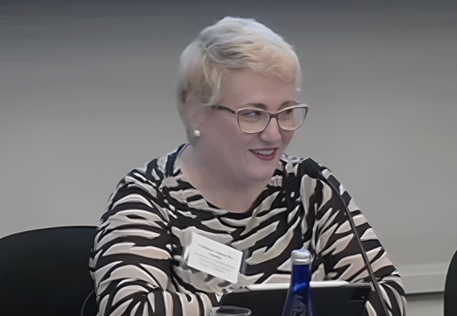
The fourth speaker, Jelena Pia-Comella, Independent Expert on the Committee on the Elimination of Discrimination Against Women, placed the discussion within the framework of international law, outlining how states’ obligations toward gender equality in the judiciary are grounded in the Convention on the Elimination of All Forms of Discrimination against Women (CEDAW), one of the world’s most comprehensive international human rights treaties, ratified by 189 states.
Pia-Comella explained that the committee supports governments in implementing the convention through periodic country reviews and “constructive dialogues,” which culminate in recommendations tailored to each state’s legal and institutional context. Central to the evening’s discussion were two of the committee’s interpretive frameworks: General Recommendation 33 on women’s access to justice and General Recommendation 40 on women’s equal and inclusive representation in decision-making systems. General Recommendation 33 calls on states to ensure that justice systems operate in ways that are accessible, gender-sensitive, and free from discrimination. This includes eliminating discriminatory laws and procedures, confronting gender stereotyping within courts, and ensuring that judges and legal professionals receive training to handle cases involving women with sensitivity and fairness.
“Access to justice,” Pia-Comella emphasized, “must embed a gender lens, from the codification of crimes to investigation, prosecution, punishment, and redress.”
General Recommendation 40 focuses more specifically on representation. It stresses that achieving parity in decision-making institutions, including the judiciary, is essential for the legitimacy, resilience, and accountability of democratic governance. Parity, she explained, should be understood not as an aspirational goal but as a structural requirement. The recommendation calls for a 50/50 gender balance across public institutions and encourages states to implement concrete measures, such as targeted recruitment, leadership development, and anti-discrimination policies, to achieve that balance. She also emphasized the importance of confronting stereotypes that discourage women from entering or advancing in traditionally male-dominated professions, including the judiciary.
“Justice systems must incorporate a feminist and human-rights-centered approach,” she said, “one that places survivors and women’s lived realities at the center of legal processes.”
National Experience: Reforming Courtroom Culture
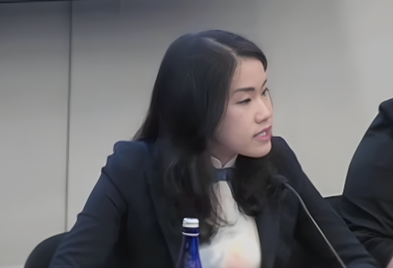
The fifth speaker, Amanda Chong, Counselor (Legal) to the Permanent Mission of Singapore to the United Nations, brought a deeply personal perspective to the conversation, reflecting on her early career as a sex crimes prosecutor. Fresh out of law school, she recalled entering courtrooms where legal proceedings were often shaped by entrenched gender stereotypes. Sexual assault cases frequently devolved into “he said, she said” narratives, with survivors subjected to humiliating questioning about their clothing, behavior, or actions before the assault.
“She should have dressed modestly. She should have fought back,” Chong recalled hearing in court. In one particularly shocking case, a defense argument suggested that a victim could have prevented rape “if she had simply crossed her legs.”
“As prosecutors, we would jump to our feet and object,” she said, “but the harm had already been done. The very utterance degraded survivors and reinforced the barriers that prevent women from reporting sexual violence.”
Over the past decade, however, Singapore has implemented reforms aimed at addressing these issues. Serious sexual offense cases are now heard by specialized judges trained to handle them, and courts have introduced new case-management procedures that allow judges to intervene when cross-examination becomes irrelevant or abusive. These changes are part of broader efforts to improve survivors’ experiences within the justice system while maintaining the rights of the accused to a fair trial. Representation has also improved. Today, women make up more than 51 percent of judges in Singapore’s lower courts, and women now account for approximately 26.7 percent of judges on the higher courts, more than double the proportion when Chong first began practicing law in 2013.
“These changes matter,” she said. “A more balanced bench brings broader perspectives to judicial deliberations and strengthens the credibility of justice.”
Transforming Judicial Institutions
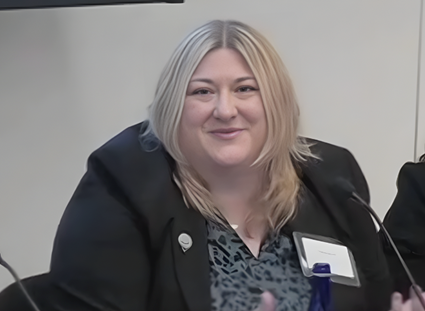
The sixth speaker, Amie Lewis, Senior Program Officer and Lead for the Women in Leadership in Law (WILIL) initiative at the IAWJ, emphasized that achieving gender parity requires more than simply increasing the number of women entering the judiciary; it requires transforming the institutions themselves. Representing the IAWJ, Lewis described how the organization connects more than 6,500 judges across over 100 countries and territories, forming the largest global network of women judicial leaders. Beyond networking, the association focuses on strengthening judicial systems so that women can not only enter the profession but also advance into leadership roles.
Through its WILIL initiative, the organization works directly with national judiciaries to identify structural barriers that limit women’s professional advancement. These barriers can include opaque promotion procedures, a lack of mentorship and sponsorship opportunities, workplace harassment, or institutional cultures that discourage women from pursuing senior judicial positions.
“We often focus on how to get women onto the bench,” Lewis said. “But the deeper question is how to create institutions where women can rise, lead, and thrive.”
Programs implemented across Kenya, Nigeria, the Philippines, South Africa, and Mexico illustrate how these challenges can be addressed through targeted reforms. In Kenya, for example, the initiative has piloted a collaborative empowerment network that pairs early-career women judges with senior judicial leaders, creating clearer pathways to promotion while also encouraging dialogues with judicial decision-making bodies to enhance transparency in judicial appointments. In South Africa, the initiative has supported the development and implementation of a judiciary-wide sexual harassment policyt, which Lewis said is essential to ensuring that women judges can work in environments that are both safe and equitable. Meanwhile in Nigeria, efforts to collect gender-disaggregated data on judicial appointments have helped reveal longstanding disparities in promotion practices. By making those disparities visible, the program has contributed to policy discussions that ultimately led to historic judicial appointments, including the selection of only the second female judge in one state after nearly two decades.
Lewis stressed that these reforms demonstrate how representation and institutional reform must go hand in hand. Increasing the number of women judges can help shift institutional culture, but sustainable progress requires structural changes that address the barriers women face throughout their careers.
“These efforts are not simply about representation,” Lewis emphasized. “They are about institutional change.”
Global Political Challenges and Technological Change
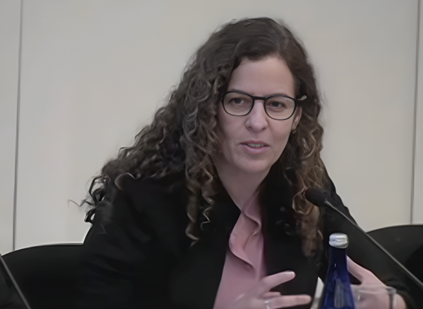
The seventh speaker, Claudia Flores, Chair of the UN Working Group on Discrimination Against Women and Girls and Faculty Co-Director of the Orville H. Schell, Jr. Center for International Human Rights at Yale Law School, broadened the discussion by examining the political and technological forces shaping the global conversation on gender equality. Reflecting on debates at CSW70, Flores noted that international consensus around women’s rights, once considered relatively stable, has become increasingly contested in recent years.
“I became a lawyer at a time when international women’s rights work was filled with optimism,” she said. “There was a sense that we were steadily building stronger norms and stronger protections. Today, we are seeing some of those commitments being questioned in ways that were unimaginable twenty years ago.”
Concepts such as affirmative measures, gender-sensitive policymaking, and substantive equality, principles long embedded in international human rights law, are now sometimes challenged during diplomatic negotiations. In some forums, Flores noted, governments have begun questioning language and frameworks that were once widely accepted. At the same time, rapid technological change is transforming how societies operate and how justice systems function. AI and automated decision-making tools are increasingly being integrated into areas such as healthcare, employment screening, policing, and legal services. While these technologies offer potential benefits, Flores warned that they also carry significant risks. Because many AI systems are trained on historical datasets, they can reproduce and amplify existing patterns of discrimination.
“These systems often reflect the biases of the societies that produced the data,” she said. “If we do not intervene deliberately, technology can reinforce the very inequalities we are trying to address.”
Flores also raised concerns about the growing phenomenon of technology-facilitated gender-based violence, including online harassment and digital abuse targeting women in public leadership roles. Such attacks can have chilling effects, discouraging women from participating in politics, the judiciary, or other positions of authority.
In some countries, she added, governments have even proposed replacing certain social services, including support systems for survivors of domestic violence, with automated digital tools.
“You can imagine the consequences of that,” she said.
For Flores, the challenge moving forward is not just technological but institutional. Justice systems must ensure that digital innovations are developed transparently, incorporate gender-sensitive design, and remain accountable to the communities they serve.
Feminist Foreign Policy and Gender Justice
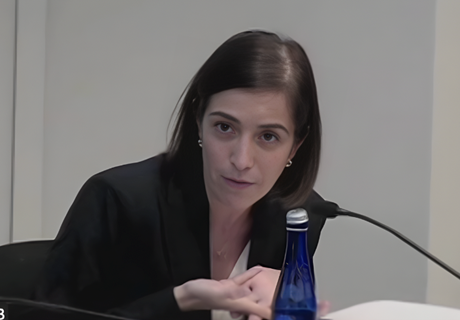
The final speaker, Lucia Solano, Legal Advisor to the Permanent Mission of Colombia, concluded the discussion by highlighting Colombia’s experience integrating gender equality into both domestic governance and international diplomacy. She pointed to Colombia’s 2016 peace agreement as a significant turning point in the country’s approach to gender justice. The agreement, negotiated after decades of armed conflict, incorporated one of the most comprehensive gender frameworks ever included in a peace process. Women’s organizations played a critical role in shaping the negotiations, ensuring that the agreement addressed issues such as conflict-related sexual violence, women’s political participation, and the economic rights of women affected by displacement and conflict. As a result, the final agreement includes more than 100 gender-related provisions, going from commitments to investigate sexual violence as a war crime to guarantees of women’s representation in post-conflict institutions.
“Women were not simply beneficiaries of the peace agreement,” Solano noted. “They were architects of it.”
Colombia’s transitional justice system, the Special Jurisdiction for Peace, has also become notable for its gender-sensitive approach to accountability and reparations. Women currently make up roughly 60 percent of the magistrates serving on the tribunal, a level of representation that has helped shape how crimes such as sexual violence are investigated and adjudicated.
Beyond domestic policy, Colombia has also adopted a feminist foreign policy framework that integrates gender equality into its diplomatic agenda. This includes advocating for women’s leadership in international organizations, promoting gender-responsive peacebuilding efforts, and ensuring that Colombian nominations to international legal bodies include qualified women candidates. Solano emphasized that while policies and frameworks are important, progress ultimately depends on concrete decisions made by governments.
“We must nominate women whenever we have the opportunity,” she said. “If we say we support gender equality but fail to act when the moment comes, then our commitments remain only words.”
For her, increasing women’s representation in international legal institutions is both a practical and symbolic step toward building justice systems that better reflect, and serve, the societies they govern.
Across the discussion, one point emerged clearly: representation within legal institutions has far-reaching consequences. When women participate equally in the judiciary, at national and international levels, justice systems become more responsive to the communities they serve. Courts gain credibility, legal analysis becomes more inclusive, and women seeking justice are more likely to trust the institutions meant to protect them.